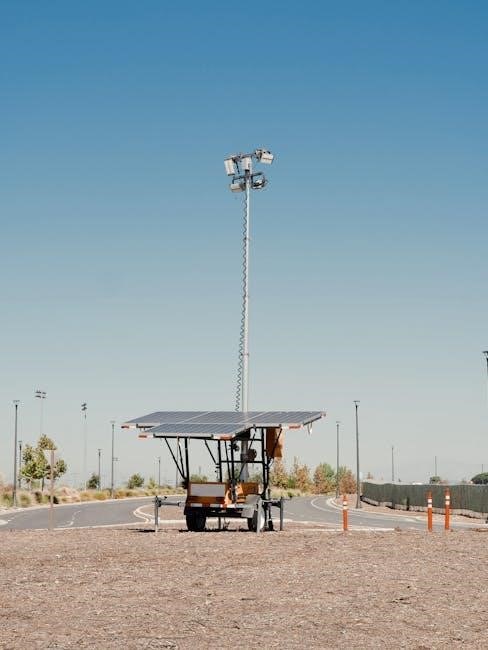
Understanding how solar panels connect – in series or parallel – is crucial for efficient energy generation, as detailed in available guides and manuals (PDFs).
Understanding the Basics of Solar Panel Configurations
Solar panel systems utilize series and parallel connections to achieve desired voltage and current levels. A fundamental understanding of these configurations is vital for effective system design and installation, often detailed in comprehensive guides like the RS PRO Solar Panel Guide (PDF). Connecting panels in series increases the overall voltage while maintaining the same current. Conversely, a parallel connection boosts the current while the voltage remains consistent.
These configurations are not mutually exclusive; series-parallel combinations offer a balance, allowing for both voltage and current optimization. Resources like Solar Energy Lab Manuals (PDF) delve into the intricacies of these setups. Choosing the right configuration depends on the specific application and the requirements of the inverter or battery bank, as highlighted in various installation guides and online calculators.
Series Connections: Increasing Voltage
Connecting solar panels in series is a method to elevate the system’s voltage, a key concept explained in solar panel system installation guides (PDF).
How Series Connections Work
In a series connection, solar panels are linked sequentially, meaning the positive terminal of one panel connects to the negative terminal of the next, much like batteries in a flashlight. This configuration doesn’t increase the current (amps) but significantly boosts the overall voltage. Think of it as adding height to a structure – each panel contributes its voltage to the total.
This is clearly illustrated in RS PRO’s Solar Panel Guide (PDF) and detailed within Solar Energy Lab Manuals. The resulting higher voltage is often necessary to match the input requirements of inverters or charge controllers, enabling efficient energy conversion for battery charging or grid-tie systems. Understanding this fundamental principle, as outlined in installation PDFs, is vital for system design.
Calculating Total Voltage in a Series Circuit
Determining the total voltage in a series solar panel circuit is straightforward: simply add the individual voltages of each panel together. For example, if you connect four 12V panels in series, the total voltage becomes 48V. This calculation is fundamental, as highlighted in numerous solar panel system installation guides (PDFs) available online.
Accurate voltage calculation, detailed in resources like solar energy lab manuals (PDF), is crucial for selecting compatible inverters and charge controllers. The document emphasizes matching the system voltage to the inverter’s input range for optimal performance. Online calculators, such as those found at solarpanelsvenue.com, can also assist with these calculations, ensuring a properly designed system.
Advantages of Series Connections
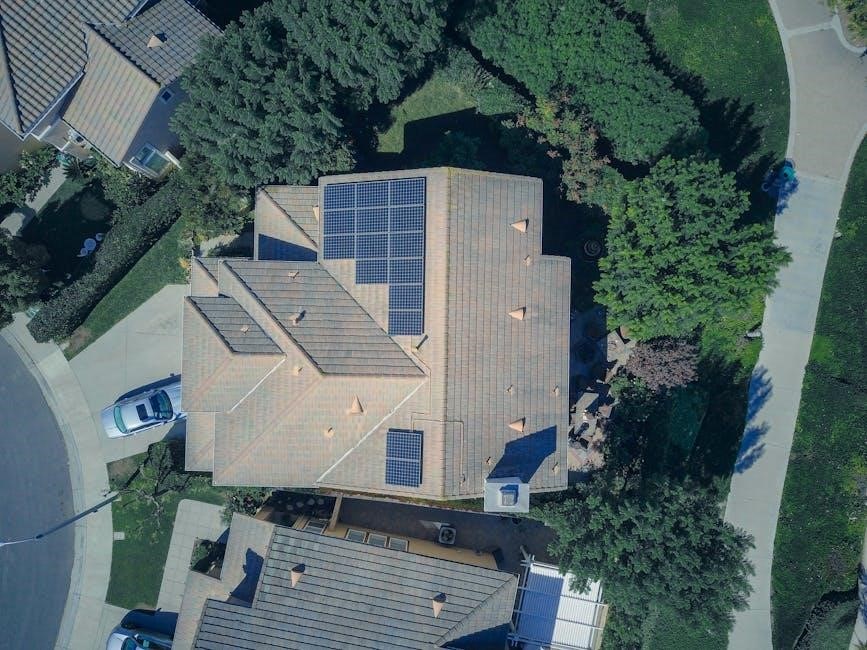
Series connections offer a significant advantage: voltage amplification. By linking panels in series, you increase the overall system voltage without increasing current. This is particularly beneficial when matching the voltage requirements of inverters or battery charging systems, as detailed in RS PRO Solar Panel Guides (PDF).
Higher voltage systems often experience reduced current, minimizing energy loss due to wire resistance over long distances. Installation guides emphasize that series connections simplify wiring for specific applications. Furthermore, resources like solar energy lab manuals (PDF) demonstrate how series configurations can optimize power transfer, leading to improved system efficiency and overall performance.
Disadvantages of Series Connections: Shading Effects
A major drawback of series connections is their susceptibility to shading. Even partial shading on a single panel can drastically reduce the output of the entire string. This is because the shaded panel acts as a bottleneck, limiting current flow for all panels in the series, as explained in various installation PDFs.
Consequently, system performance is heavily impacted by even minor obstructions. Solar Energy Lab Manuals (PDF) highlight the importance of careful site assessment to minimize shading. Bypass diodes are often incorporated to mitigate this issue, but they don’t eliminate the performance loss entirely. Understanding these limitations is crucial for optimal system design.

Parallel Connections: Increasing Current
Connecting solar panels in parallel boosts the overall current while maintaining the voltage, a configuration detailed in solar panel system installation guides (PDFs).
How Parallel Connections Work
In a parallel configuration, the positive terminals of each solar panel are connected together, and similarly, all the negative terminals are joined. This setup doesn’t increase the voltage produced by individual panels; instead, it combines their currents. Think of it like multiple lanes on a highway – more lanes (panels) allow more traffic (current) to flow simultaneously.
Crucially, this means the overall system voltage remains the same as a single panel’s voltage. However, the total current output is the sum of the currents from each panel. This is particularly useful when powering devices requiring higher current at a specific voltage. Resources like RS PRO’s Solar Panel Guide (PDF) illustrate this principle, emphasizing how parallel connections enhance power delivery capabilities for various applications, as detailed in solar energy lab manuals.
Calculating Total Current in a Parallel Circuit
Determining the total current in a parallel solar panel circuit is straightforward: you simply add the individual currents produced by each panel. If you have ‘n’ panels, each producing a current of ‘I’ amps, the total current (Itotal) is calculated as Itotal = n * I. This calculation is fundamental when designing systems, as highlighted in solar panel system installation guides (PDF).
For example, if five panels each generate 5 amps, the total current would be 25 amps. This increased current capacity is vital for charging larger battery banks or powering higher-demand loads. Online tools, like those found at solarpanelsvenue.com, can quickly perform these calculations, aiding in accurate system design and component selection, as detailed in various resources.
Advantages of Parallel Connections
Parallel connections offer significant benefits for solar panel systems, primarily by increasing the overall current output. This is crucial for applications requiring substantial power, as detailed in solar energy lab manuals (PDF). A key advantage is improved system resilience; if one panel is shaded or fails, the others continue producing power, minimizing overall energy loss.
Furthermore, parallel configurations maintain a consistent voltage, matching the voltage of a single panel, simplifying compatibility with inverters and battery systems. Resources like RS PRO Solar Panel Guides emphasize this benefit. This setup is ideal for UK households seeking alternatives to the grid, offering a reliable and scalable power solution, as discussed in recent articles.
Disadvantages of Parallel Connections
While beneficial, parallel connections aren’t without drawbacks. A primary concern is the potential for increased wiring complexity and cost, requiring thicker gauge wires to handle the higher current flow. This is highlighted in solar panel system installation guides (PDFs). Additionally, parallel circuits can experience ‘reverse current’ issues if a panel develops a fault, potentially damaging other panels or requiring additional protective devices like diodes.
Moreover, maintaining optimal performance across all panels is critical; mismatched panels can lead to inefficiencies. Understanding these limitations, as outlined in online resources, is vital for effective system design and troubleshooting, ensuring a reliable and safe solar energy setup for homes and businesses.
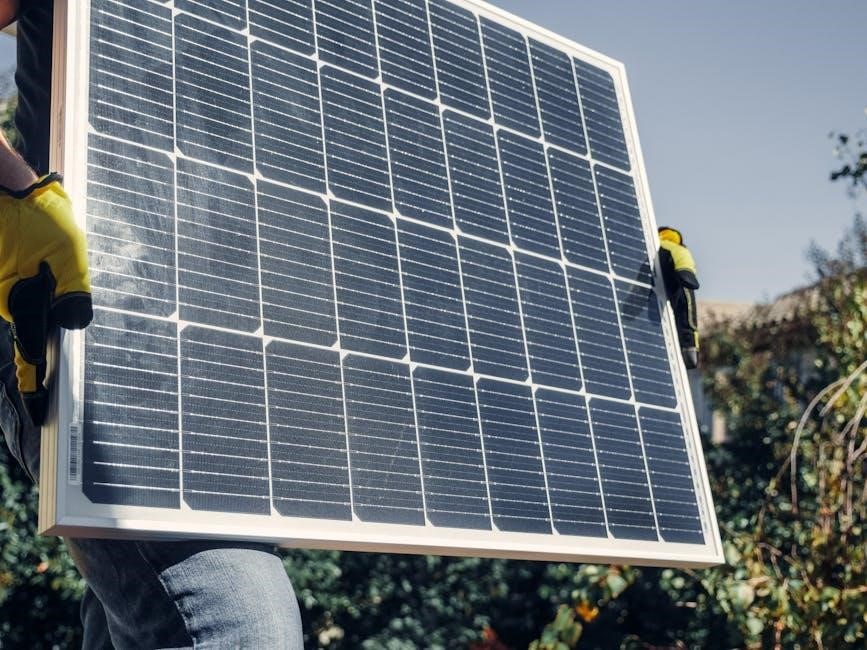
Series-Parallel Combinations: The Best of Both Worlds
Combining series and parallel connections offers a flexible solution, optimizing voltage and current for diverse applications, as detailed in system design PDFs.
Why Use a Series-Parallel Configuration?
A series-parallel configuration strategically balances the benefits of both connection types, addressing limitations inherent in solely series or parallel setups. Connecting panels in series increases system voltage, crucial for matching inverter input requirements and reducing transmission losses over longer distances. However, series connections are vulnerable to shading; a single shaded panel drastically reduces overall output.
Parallel connections, conversely, boost current, enhancing performance in suboptimal conditions. They mitigate shading issues, as other panels continue producing power even if one is partially obstructed. Yet, parallel configurations require thicker wiring to handle the increased current, potentially adding to system costs.
Therefore, a series-parallel design offers the best of both worlds: higher voltage for efficient transmission and increased current for resilience against shading, as explained in detailed installation guides (PDFs).
Designing a 15kW Solar Array with Series-Parallel Connections
Creating a 15kW (75,000-watt) solar array using 250-watt panels demands careful series-parallel planning, as outlined in system design documentation (PDFs). First, determine the number of panels: 75,000W / 250W/panel = 300 panels. Next, consider inverter voltage requirements. Let’s assume a 400V inverter.
To achieve approximately 400V, connect panels in series to reach that voltage level – for example, 16 panels at ~25V each yields 400V. Then, group these series strings in parallel. 300 panels / 16 panels/string = 18.75 strings. Round down to 18 strings, resulting in a slightly lower overall wattage.
This 18 x 16 configuration provides a robust and efficient 15kW system, balancing voltage and current for optimal performance, detailed in readily available resources (PDFs).
Calculating Panel Arrangement for Specific Voltage and Current Needs
Determining the optimal panel arrangement—series versus parallel—hinges on your system’s voltage and current requirements, as detailed in solar installation guides (PDFs). Series connections increase voltage; parallel connections boost current. To calculate, first identify the desired system voltage. Then, divide that by the individual panel voltage to find the number of panels per series string.
For example, a 48V system with 24V panels needs two panels in series. To calculate current, determine the total wattage needed and divide by the system voltage. Parallel strings are then calculated by dividing the total panel count by the series string count.
Careful calculations, often aided by online tools and PDFs, ensure efficient energy harvesting and compatibility with your inverter/UPS.
I-V and P-V Characteristics of Series and Parallel Modules
Analyzing I-V and P-V curves (found in solar energy lab manuals – PDFs) reveals how series and parallel connections impact performance under varying conditions.
Analyzing Performance Under Varying Conditions
Detailed analysis, often documented in solar energy lab manuals (available as PDFs), focuses on how series and parallel configurations respond to fluctuating environmental factors. Specifically, the impact of temperature and irradiation levels significantly alters the I-V and P-V characteristics of photovoltaic (PV) modules.
Increased temperature generally reduces voltage output, while irradiation intensity directly affects current generation. Series connections amplify these voltage changes, potentially leading to power losses if shading occurs on even a single panel. Conversely, parallel connections maintain current levels, offering resilience against partial shading. Understanding these dynamics, through studying provided documentation, is vital for optimizing system design and predicting real-world performance, ensuring maximum energy yield from your solar installation.
Impact of Temperature and Irradiation
Solar panel performance is intrinsically linked to temperature and irradiation, as explored in comprehensive solar energy resources (often available in PDF format). Higher temperatures negatively impact voltage output, reducing overall efficiency; this effect is more pronounced in series connections where a single hot panel can diminish the entire string’s performance.
Conversely, irradiation – the amount of sunlight – directly influences current generation. Increased sunlight boosts current, benefiting parallel configurations which maintain current levels even with partial shading. Analyzing I-V and P-V curves under varying conditions, detailed in lab manuals, reveals these relationships. Understanding these impacts is crucial for accurate system modeling and optimizing panel placement for maximum energy harvest.
Practical Considerations for Installation
Proper installation, including south-facing mounting angles and accurate inverter/UPS sizing (detailed in system guides and PDFs), is vital for optimal performance.
Mounting and Orientation (Facing South)
Optimal solar panel installation hinges on strategic mounting and orientation, specifically facing south in the Northern Hemisphere. Documents and installation guides (available as PDFs) consistently emphasize this for maximizing sunlight capture throughout the day. The angle of inclination is also critical, varying based on latitude and seasonal energy needs.
Correct orientation directly impacts the efficiency of both series and parallel connected systems. Shading, even partial, can significantly reduce output, particularly in series configurations. Therefore, a clear, unobstructed southern exposure is paramount. Proper mounting ensures structural integrity against wind and weather, safeguarding the investment and maintaining consistent energy production. Referencing detailed PDFs provides specific angle recommendations for your location.
Determining Inverter/UPS Rating
Accurately sizing your inverter or UPS is vital for a functional solar power system, as detailed in system calculation guides (often available as PDFs). The total wattage of your solar array – whether configured in series, parallel, or a combination – dictates the required inverter capacity. It’s crucial to slightly oversize the inverter (typically by 20-25%) to accommodate peak power generation and potential surges.
Consider the voltage compatibility between the solar panel configuration (series increases voltage, parallel increases current) and the inverter’s input requirements. PDFs often provide detailed calculations for determining the appropriate inverter rating based on array size and battery bank specifications. A mismatched inverter can lead to inefficiency or system failure.
Resources and Further Learning
Explore detailed solar panel system installation guides and comprehensive solar energy lab manuals, readily available for download in PDF format for deeper understanding.
Solar Panel System Installation Guides (PDF)
Numerous PDF guides detail solar panel installation, often emphasizing proper wiring configurations for optimal performance. These resources frequently cover series and parallel connections, explaining how each impacts voltage and current output. RS PRO offers a solar panel guide (PDF) outlining characteristics and mounting considerations.
Installation steps typically include facing panels south at an appropriate angle, a crucial detail highlighted in many guides. Documents analyze I-V and P-V characteristics under varying conditions, aiding in system design.
These PDFs often provide practical advice on calculating battery bank capacity and inverter/UPS ratings, essential for a complete system. They are invaluable for both DIY enthusiasts and professionals seeking to understand and implement effective solar power solutions.
Solar Energy Lab Manuals (PDF)
Comprehensive solar energy lab manuals (PDF format) provide in-depth explorations of photovoltaic (PV) module behavior, including series and parallel connections. These manuals often feature supplemental activities designed around solar energy kits, allowing for hands-on learning.
They detail the analysis of I-V and P-V characteristics, demonstrating how these curves shift when modules are connected differently. Understanding these characteristics is vital for predicting system performance under varying temperature and irradiation levels.
These resources frequently include exercises focused on calculating total voltage and current in both series and parallel circuits, reinforcing theoretical concepts with practical application. They are essential for students and technicians seeking a thorough understanding of solar energy systems.
Emerging Trends in Solar Panel Technology
Innovations like SOLAR-10.7B, an open-source LLM, and advancements in solar-thermal technologies are reshaping the landscape of energy production and efficiency.
Open-Source LLM Models (SOLAR-10.7B) and their Relevance
SOLAR-10.7B, developed by upstage, represents a significant leap in open-source Large Language Models (LLMs). This model, originating from Korea, claims to be the world’s first open-source model of its scale. It achieves this by employing a unique Depth Up-Scaling technique, expanding a 7B parameter model to 10.7B.
While seemingly unrelated to solar panel configurations like series and parallel connections, LLMs like SOLAR-10.7B hold relevance for optimizing solar energy systems. They can analyze vast datasets related to panel performance, weather patterns, and energy consumption to predict output and improve grid integration. Furthermore, these models can assist in designing efficient series-parallel arrangements, potentially streamlining the process outlined in installation guides (PDFs) and lab manuals.
Solar-Thermal Energy Technologies
Solar-thermal energy technologies offer a distinct approach to harnessing solar power, differing from photovoltaic (PV) systems utilizing series and parallel panel connections. These technologies convert solar radiation into heat, which can then be used for various applications like heating water, generating steam for electricity, or providing direct heating for buildings.
While PV systems, detailed in installation guides (PDFs), focus on electricity generation through panel arrangements, solar-thermal systems represent a complementary energy solution. Understanding both technologies provides a comprehensive view of solar energy utilization. Though not directly related to wiring configurations like series or parallel connections, integrating solar-thermal with PV systems can maximize overall energy efficiency and reduce reliance on traditional energy sources.